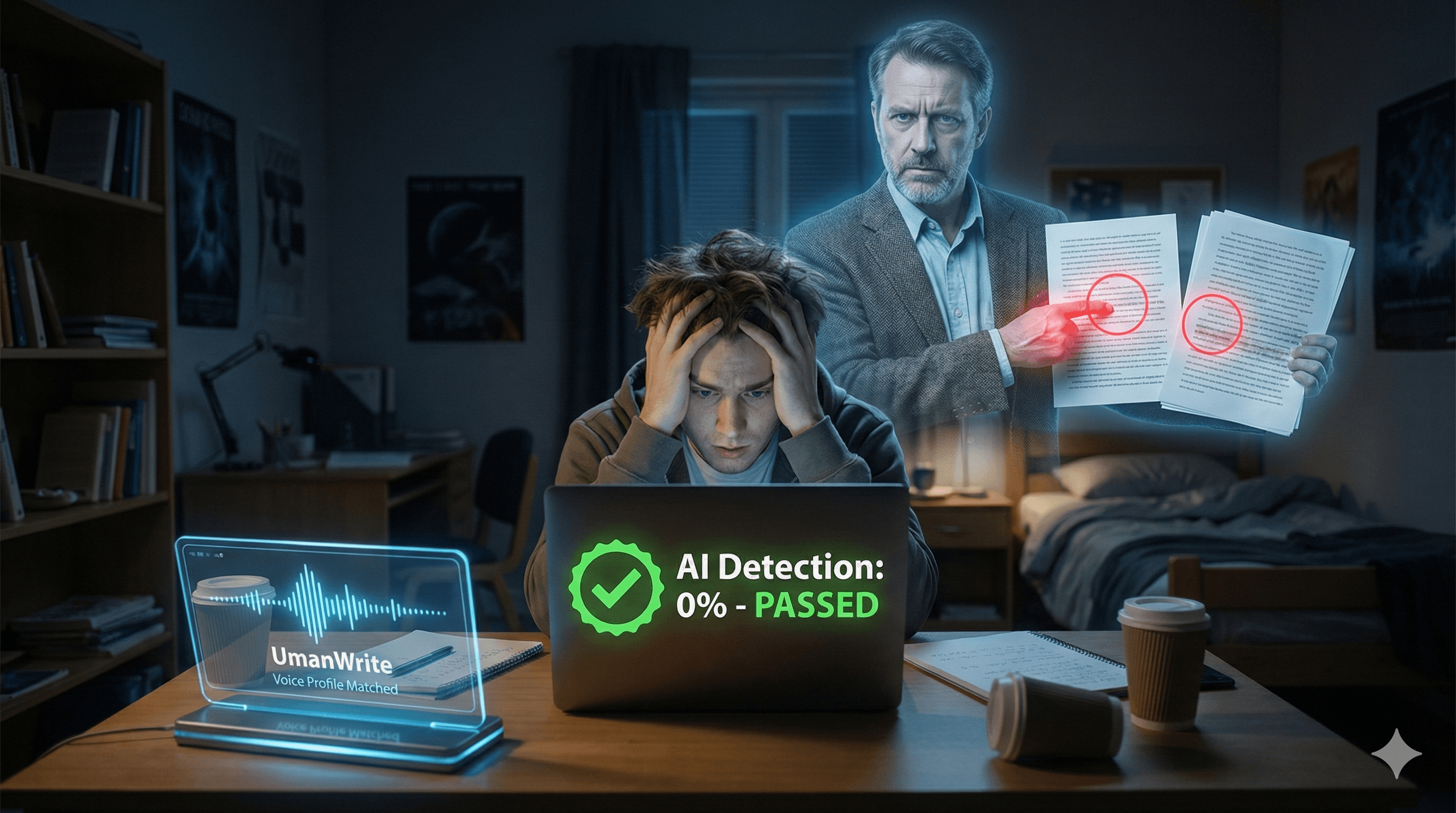
Students
Why You’ll Still Get Flagged in 2026 Even After You “Humanize” AI Writing (Yes, Even When Turnitin Doesn’t)
Aug 18, 2025
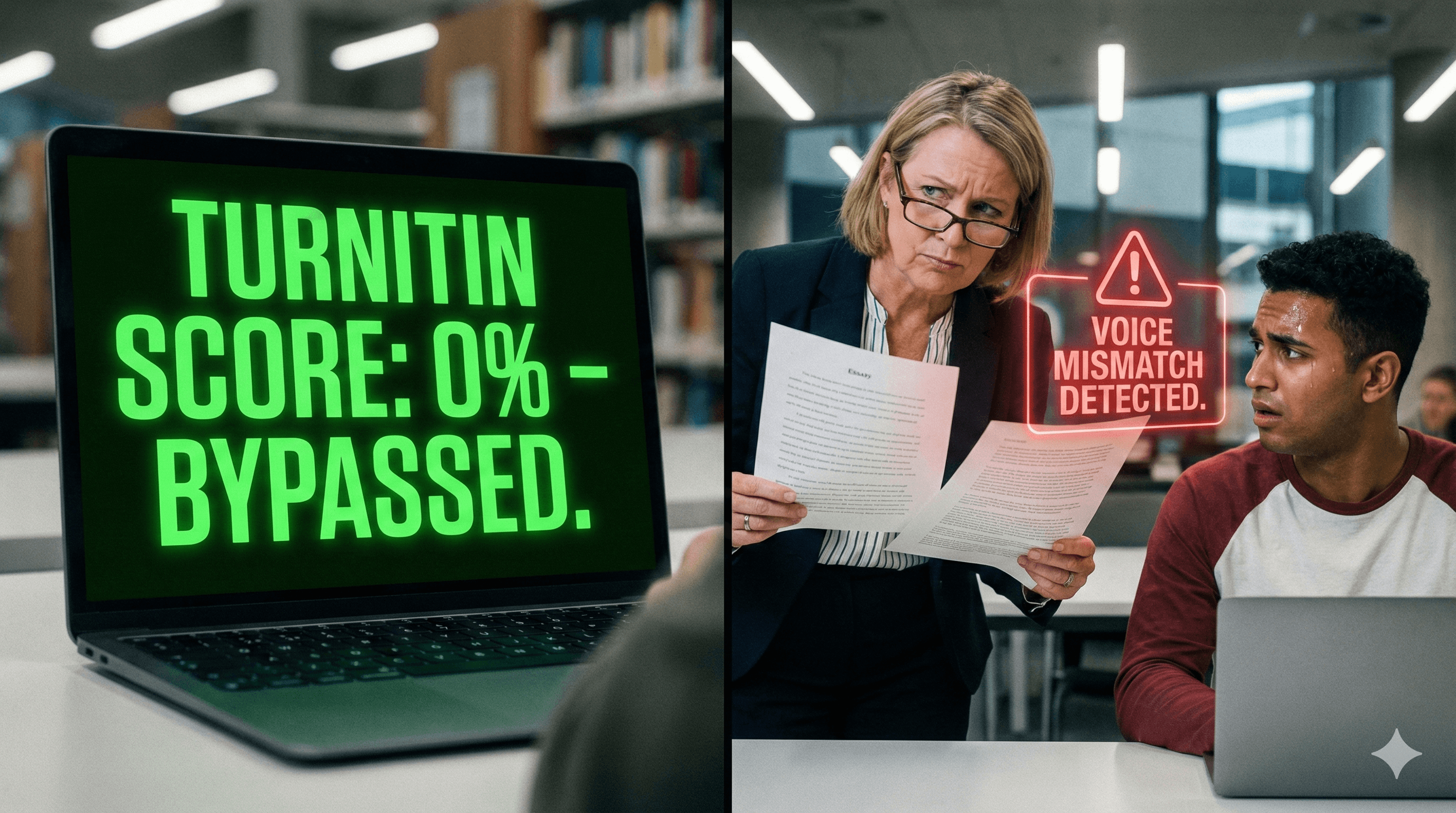
The real reason students get flagged: “voice drift”
The #1 giveaway isn’t “AI phrasing.” It’s the gap between:
how you usually write
and how this one submission suddenly reads
You might normally write in a straightforward, simple style—then the new paper shows up with:
advanced transitions (“moreover,” “thus,” “notwithstanding”)
perfect academic cadence
polished rhetorical framing
unusually confident conclusions
a vocabulary jump that doesn’t match your prior work
Teachers don’t need an AI detector to notice that change. They just compare it to what they already know about you.
And in 2026, many educators are doing exactly that—intentionally.
“But it passed Turnitin…” (Why that doesn’t guarantee anything)
A lot of students assume that if Turnitin (or any AI detector) doesn’t flag the writing, they’re in the clear.
Two problems with that thinking:
1) Detectors are only one signal
Even when used, detectors are usually not the final decision. Teachers also look at:
whether the argument sounds like your reasoning
whether examples feel personal, specific, and course-relevant
whether sources are real, appropriate, and correctly used
whether the writing matches your previous work
2) Teachers can assess how you wrote, not just what you submitted
In many classes, your writing process is visible:
drafts and revisions
timestamps
version history
changes over time (not just a final paste-in)
A clean, “perfect” final document with no real drafting trail can raise questions—especially if your normal writing process looks different.
So even if an AI detector doesn’t light up, the submission can still feel off.
The second big risk: shallow content (and weak sources)
AI humanizers can change tone, but they can’t automatically fix:
unsupported claims
vague arguments
generic examples
fake or irrelevant citations
“sounds smart but says nothing” paragraphs
That’s where a lot of students get hit hardest: not with “AI accusations,” but with lower grades because the writing lacks real evidence and specificity.
Teachers can smell “generic” from a mile away—especially in reflection papers, analysis essays, or anything that requires personal thinking.
What teachers are doing more in 2026
Here’s what’s becoming more common (and why “humanizing” alone doesn’t solve it):
Writing portfolio comparison: “Does this sound like your previous work?”
In-class writing samples: short timed writing to establish baseline style
Oral check-ins: “Explain your thesis and sources in your own words.”
Rubrics that reward specificity: personal detail + course references + real evidence
Process-based grading: outlines, drafts, revisions, and annotated sources
Notice the theme: it’s not “gotcha tech.” It’s authenticity and consistency.
What to do instead: use AI support in a way that stays you
If you’re using AI as support (and your class policy allows it), the safest approach isn’t “humanize and hope.”
It’s building a workflow where the writing stays connected to:
your ideas
your voice
your actual skill level
your sources
That means AI should function more like a writing coach, not a ghostwriter.
Where UmanWrite fits (without the messy copy/paste loop)
This is where UmanWrite is different from a basic AI humanizer.
UmanWrite is built around the idea that students don’t just need “more human text.” They need writing that stays consistent with their own style—so the output doesn’t randomly shift from one assignment to the next.
UmanWrite isn’t “just a humanizer.”
Yes, it includes rewriting/humanizing tools. But it goes beyond that by letting you create voice profiles based on your own writing.
Here’s the ethical way to think about it:
You feed UmanWrite examples of your past writing (especially work you earned strong grades on).
It learns your tone, rhythm, grammar habits, and sentence structure.
When you draft and revise, it helps you improve clarity and strengthen structure while staying aligned with how you naturally write.
So instead of producing a paper that sounds like “someone else,” you get writing that feels like a better version of you—cleaner, clearer, and more consistent.
Why that matters
Because the biggest risk isn’t a detector. It’s submitting something that doesn’t match your normal voice.
UmanWrite is designed to reduce that mismatch by keeping your writing style consistent across essays, reflections, and longer assignments—without forcing you to bounce between tools, tabs, and copy/paste workflows.
The real “win” in 2026: authenticity + originality
If you want to avoid stress and protect your grades, focus on what teachers actually reward:
clear thinking
real sources
specific examples
consistent voice
visible writing process
AI can absolutely help with that—when you use it to draft, revise, and learn, instead of trying to “pass” something off.
Final takeaway
AI humanizers might change the texture of a paragraph. But in 2026, what gets flagged is usually bigger than texture:
It’s voice drift. It’s shallow reasoning. It’s weak sources. It’s inconsistency.
Use AI to write better—not to hide.
And if you want a platform built for that kind of authentic support—where your writing stays consistent, familiar, and original—UmanWrite is designed for exactly that workflow.